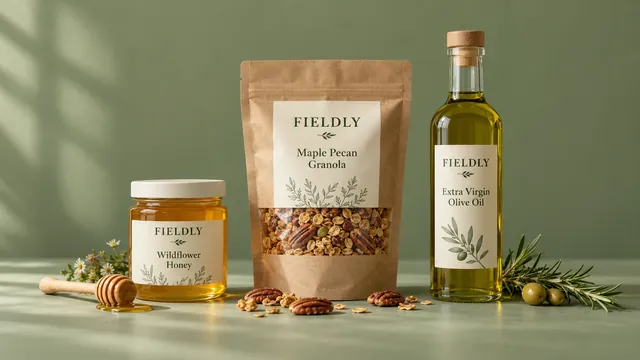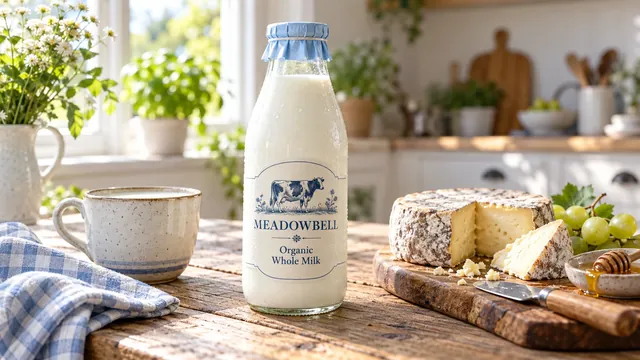
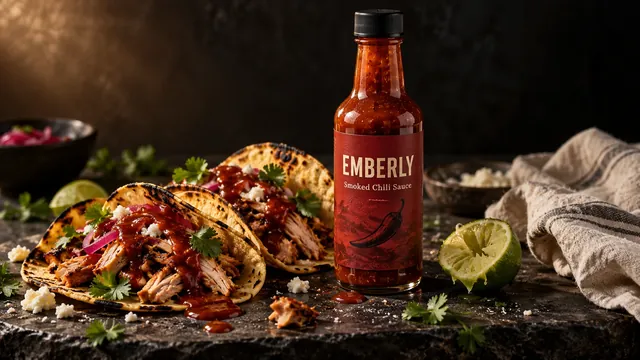
Food photography is moving away from perfection. The spotless plates and impossibly glossy burgers of a few years ago are giving way to images that feel real, tactile and a little imperfect. Shoppers scroll past anything that looks like an ad, but they stop for food that looks like someone is about to eat it.
Here are the three styles shaping 2026, and how food and drink brands can use them.
1. Messy realism food photography
Messy realism shows food the way people actually enjoy it: a drip running down the side of a jar, crumbs on the board, a bite taken out of the toast, a napkin pushed aside.
Why it works:
- It feels honest, which builds trust.
- It suggests the product is so good someone couldn't wait.
- It looks native on Instagram and TikTok, where polished ads get skipped.
How to use it:
- Show the product mid-use: spreading, pouring, dipping or sharing.
- Leave natural traces: a smear, a spill, a few crumbs.
- Keep the pack clean and readable in the frame. The mess is around the product, never on the label.
2. Authentic product textures
Close-ups that show authentic product textures are replacing wide, empty shots. Think the crunch of a roasted snack, seeds in a jam, foam on a cold drink, or the swirl of a sauce.
Tips:
- Use side or back light to bring out texture.
- Get close: a macro detail can be the hero image for a carousel.
- Pair one texture close-up with one pack shot, so customers connect the feeling to the product.
3. Moody minimalism product shots
Moody minimalism uses dark or deep-colored backgrounds, a single directional light and very few props. It makes premium products feel crafted and special.
It suits:
- Gourmet sauces, oils, chocolates and coffee
- Spirits, craft sodas and premium drinks
- Limited editions and gift packs
Keep it simple: one product, one or two ingredients, one light. Let the shadows do the work.
Packaged food product photography: putting it together
For packaged food product photography, the best feeds mix all three styles:
| Shot | Style | Purpose |
|---|---|---|
| Clean hero on light background | Classic | Listings and ads |
| Pack with ingredients, mid-use | Messy realism | Social and lifestyle |
| Macro of the food itself | Authentic texture | Carousels, stories |
| Single light, dark backdrop | Moody minimalism | Launches, premium lines |
This mix keeps your feed varied while the product stays the same in every frame.
Gourmet sauce hero shots
Sauces are hard to photograph because the product inside is often hidden. Strong gourmet sauce hero shots usually include:
- A pour or drizzle captured mid-motion over the food it belongs with
- The bottle in focus beside it, label facing the camera
- One hero ingredient such as chilies, garlic or herbs to signal flavor
- A warm, low light for depth, or moody minimalism for premium lines
Beverage advertising visuals using AI
Drinks are where AI production shines. Ice, condensation, splashes and sunset backdrops are expensive to shoot but fast to build digitally. Beverage advertising visuals using AI work best when:
- The can or bottle comes from your real packshot, not redrawn by the tool
- Condensation and ice look physically believable
- The label stays sharp and correctly spelled in every frame
This is also where AI commercial food photography needs human checking most: AI tools often warp logos on curved cans.
A note for restaurants: affordable food styling for menus
Restaurants and cafés can use the same principles for affordable food styling for menus: consistent angles, one light direction and real textures. A consistent set of menu photos makes delivery apps and printed menus look far more professional, even on a small budget.
How to start
- Pick one style that fits your brand's personality.
- Plan four to six images around it for the month.
- Keep your pack identical in every shot.
- Review which style earns the most saves and shares, then do more of it.
See how we apply these styles in our food and drink brand content service, or request a free demo for one of your products.
Frequently asked questions
What is messy realism in food photography?
It's a style that shows food as it's really eaten, with drips, crumbs and bites, instead of a perfect, untouched plate. It feels more authentic and performs well on social media.
Is moody food photography still popular?
Yes. Moody minimalism, with dark backgrounds and a single light, remains a strong choice for premium products like sauces, chocolate, coffee and drinks.
Can AI create realistic food photos?
AI can build realistic scenes, light and props quickly, but results need human checking for edible-looking textures and an accurate label on the pack.
What's the best background for packaged food photos?
Use a clean, light background for marketplace listings, and real-life settings such as a kitchen table or picnic for social media and ads.